

In the bustling world of early childhood education, the Indiana Early Learning Standards stand out like a superhero cape on laundry day. These standards aren’t just a set of guidelines; they’re the secret sauce that helps educators whip up a delightful learning experience for little ones. By focusing on essential skills and developmental milestones, they ensure that children in Indiana are not just surviving but thriving.
Imagine a classroom where toddlers are mastering the art of sharing toys like pros while simultaneously crafting masterpieces with finger paints. That’s the magic of these standards! They provide a roadmap for educators, guiding them through the delightful chaos of early learning. So, buckle up and get ready to explore how these standards are shaping the future of Indiana’s youngest learners, one giggle and scribble at a time.
Overview of Indiana Early Learning Standards
Indiana Early Learning Standards provide essential guidelines for educators working with young children. These standards emphasize key skills necessary for development, including cognitive, social-emotional, and physical growth. They serve as a framework, detailing what children should know and be able to do at various stages of early childhood.
Focus areas of the standards include foundational skills in literacy and mathematics, fostering creativity, and enhancing social interactions. Each standard outlines specific milestones that educators use to tailor learning experiences. Teachers assess and adapt their approach based on these benchmarks, ensuring individualized learning pathways.
Implementation of these standards occurs in various settings, such as preschools and childcare programs. Collaboration among educators, parents, and communities enhances the effectiveness of this initiative. Programs throughout Indiana utilize these standards to create enriching environments, encouraging exploration and engagement.
Research shows that adherence to the Indiana Early Learning Standards correlates with improved outcomes for children. Reports indicate children exposed to these guidelines demonstrate greater readiness for kindergarten. Alignment with the state’s educational goals supports a seamless transition from early learning to primary education, benefiting children across Indiana.
The commitment to early education reform strengthens the foundation for future academic success, and it’s imperative for educators to stay informed about these evolving standards. Consistent updates ensure alignment with best practices in early childhood education, safeguarding the interests and growth of Indiana’s youngest learners.
Importance of Early Learning Standards
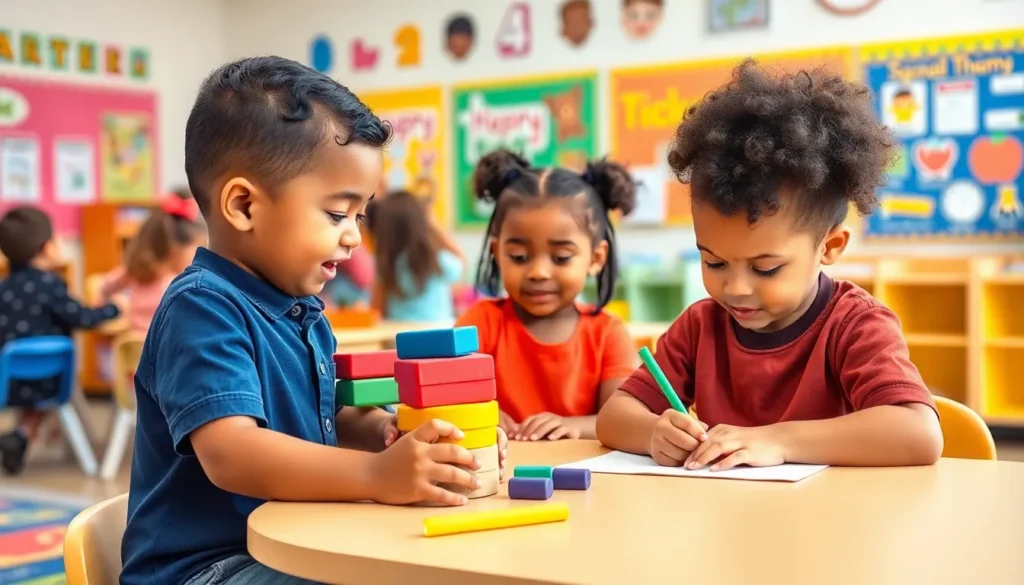
Early Learning Standards play a critical role in shaping the education landscape for children in Indiana. These standards drive comprehensive child development through structured guidelines.
Developmental Benefits
Children’s cognitive and social-emotional growth is significantly influenced by adhering to the Indiana Early Learning Standards. Standards provide a framework for educators to foster essential skills and milestones. Development in literacy and mathematics forms the foundation for later learning. Engaging activities enhance creativity and social interactions. Educators utilize these guidelines to personalize learning experiences that cater to individual needs. Additionally, research consistently shows that children who meet these standards exhibit improved developmental outcomes. More specifically, they demonstrate increased problem-solving abilities and better peer relationships.
Preparing for School Readiness
Preparation for kindergarten becomes more effective when children engage with the Indiana Early Learning Standards. These standards equip children with foundational skills essential for school success. Focused learning experiences enable children to develop critical thinking and communication skills. Engaging in various activities cultivates curiosity, allowing children to explore their environment. Furthermore, collaboration among parents, educators, and communities reinforces relationships and supports overall growth. Evidence shows that children meeting these readiness benchmarks transition smoothly into formal schooling. This alignment with best practices sets the stage for academic achievement and lifelong learning.
Key Components of Indiana Early Learning Standards
Indiana Early Learning Standards encompass essential elements critical for child development in early education settings. These components guide educators and parents in nurturing well-rounded learners.
Learning Domains
Learning domains outline key areas of development for children from birth to age five. Cognitive development focuses on problem-solving skills and understanding the world through exploration. Language development emphasizes communication, allowing children to express themselves effectively. Social-emotional development fosters relationships, teaching children to collaborate and empathize with others. Physical development highlights gross and fine motor skills, encouraging physical health through active play and coordination. Each domain plays a vital role in comprehensive early childhood education.
Milestones and Objectives
Milestones and objectives provide clear benchmarks for assessing child progress. Specific learning goals outline expected achievements in literacy, mathematics, and social-emotional skills. For example, children should recognize letters and numbers by age four, setting a foundation for reading and math. Social skills such as sharing and taking turns become objectives that support interpersonal relationships. Establishing these milestones helps educators tailor learning experiences, ensuring that all children reach developmental targets on their educational journey.
Implementation Strategies
Implementation strategies focus on engaging stakeholders in the Indiana Early Learning Standards to ensure their effectiveness. These strategies cater to the needs of educators, parents, and caregivers, fostering a comprehensive understanding of the standards.
For Educators
Educators play a pivotal role in applying Indiana Early Learning Standards. Individualized lesson plans align with specific developmental milestones, promoting tailored learning experiences. Professional development sessions help deepen understanding of the standards, allowing educators to refine instructional methods. Collaborative activities among teachers encourage idea sharing and enhance creative approaches to implementing the standards. Regular assessments monitor children’s progress, ensuring alignment with established benchmarks. Using a variety of teaching tools, educators can create dynamic learning environments that stimulate cognitive and social-emotional growth among young children.
For Parents and Caregivers
Parents and caregivers significantly contribute to the implementation of Indiana Early Learning Standards. Engaging in consistent communication with educators helps them stay informed about children’s progress. Participating in workshops provides valuable insights into developmental milestones and effective support strategies. Home activities that reinforce learning experiences can foster essential skills in literacy and mathematics. By creating a cooperative learning environment at home, caregivers reinforce standards-based practices. Advocacy for early learning initiatives ensures continuous support for the educational community, demonstrating a united effort to enhance children’s developmental outcomes.
The Indiana Early Learning Standards serve as a vital framework for shaping early childhood education. By focusing on key developmental milestones and essential skills, these standards empower educators to create tailored learning experiences that foster growth in young children.
Collaboration among parents, educators, and communities enhances the effectiveness of these standards, ensuring that every child is well-prepared for their educational journey. As early learning practices continue to evolve, staying informed about these standards is crucial for maximizing their impact.
Ultimately, the commitment to these guidelines not only supports children’s immediate educational needs but also lays a strong foundation for lifelong learning and success.


