
In a world where toddlers can master smartphones faster than their parents, early learning has never been more crucial. Imagine a place where curiosity reigns supreme and every crayon scribble is a leap towards genius. That’s the magic of early learning experiences—where tiny minds expand and playtime becomes a powerful tool for growth.
Parents often wonder if their little ones are getting the best start. Spoiler alert: they are! With engaging activities and playful exploration, early learning isn’t just about ABCs and 123s. It’s about fostering creativity, problem-solving skills, and social connections. So buckle up for a delightful journey into the world of early education, where every giggle and “aha!” moment counts. Who knew learning could be this much fun?
What Is Experience Early Learning?
Experience early learning refers to educational practices that engage young children in meaningful, hands-on activities. These activities nurture curiosity, creativity, and problem-solving skills. Early learning environments cultivate social connections among peers, promoting teamwork and collaboration.
Development in these settings goes beyond mere academics. Children explore concepts through play, which enhances their understanding of the world. Emphasis on interactive learning fosters critical thinking and active participation. Parents often find that their children develop essential life skills during these formative years.
Qualified educators implement structured programs tailored to individual needs. These programs focus on diverse learning styles and paces, ensuring all children benefit. Utilizing technology in age-appropriate ways allows for multi-faceted experiences, preparing children for future learning.
Research demonstrates that early experiences shape cognitive and emotional development. Engaging learning environments promote a sense of belonging and security. When children feel valued and supported, they thrive both academically and socially.
Parents play an integral role in early learning as well. Encouraging exploration at home reinforces skills learned in educational settings. Integrating learning into daily routines makes education an enjoyable part of life.
Thus, experience early learning stands as a vital component for fostering well-rounded, capable children. These early years establish a foundation for lifelong learning and success.
Benefits Of Experience Early Learning

Experience early learning offers numerous advantages essential for children’s growth. Engaging in this type of learning supports various developmental milestones.
Cognitive Development
Cognitive development benefits greatly from hands-on learning activities. Young children exposed to interactive experiences show enhanced problem-solving abilities and improved critical thinking skills. Engaging in play-based learning enables them to explore concepts actively, fostering creativity. Research indicates that early exposure to these experiences leads to better academic performance later. Moreover, children develop a love for learning at an early age, instilling a curiosity that lasts. Qualified educators play a crucial role by guiding these activities and tailoring them to individual needs. The structured environment encourages exploration and learning at each child’s own pace.
Social Skills Enhancement
Social skills enhancement is another key benefit of experience early learning. Children learn to communicate and collaborate with peers through group activities. They practice sharing, taking turns, and problem-solving in social situations. This collaboration fosters empathy and understanding, critical for building positive relationships. Participation in diverse interactions allows children to navigate different social contexts. As they develop these skills, they gain confidence in their abilities. Educators facilitate group dynamics, ensuring every child feels included and valued. Early experiences provide a solid foundation for future social interactions, shaping them into well-rounded individuals.
Methods Of Experience Early Learning
Experience early learning utilizes various methods that engage young children through stimulating environments. Two prominent approaches include play-based learning and hands-on activities.
Play-Based Learning
Engaging children through play-based learning encourages exploration and creativity. In this method, children interact with their surroundings while enhancing cognitive and social skills. Activities like role-playing and imaginative games foster communication abilities and decision-making. Research shows that play promotes healthy brain development, boosting critical thinking capabilities. Educators design structured play experiences aligned with developmental goals, ensuring children connect learning concepts organically. Collaborative play further enhances social interactions, guiding children to share, negotiate, and collaborate effectively. Through play, young learners build the foundational skills necessary for future academic success.
Hands-On Activities
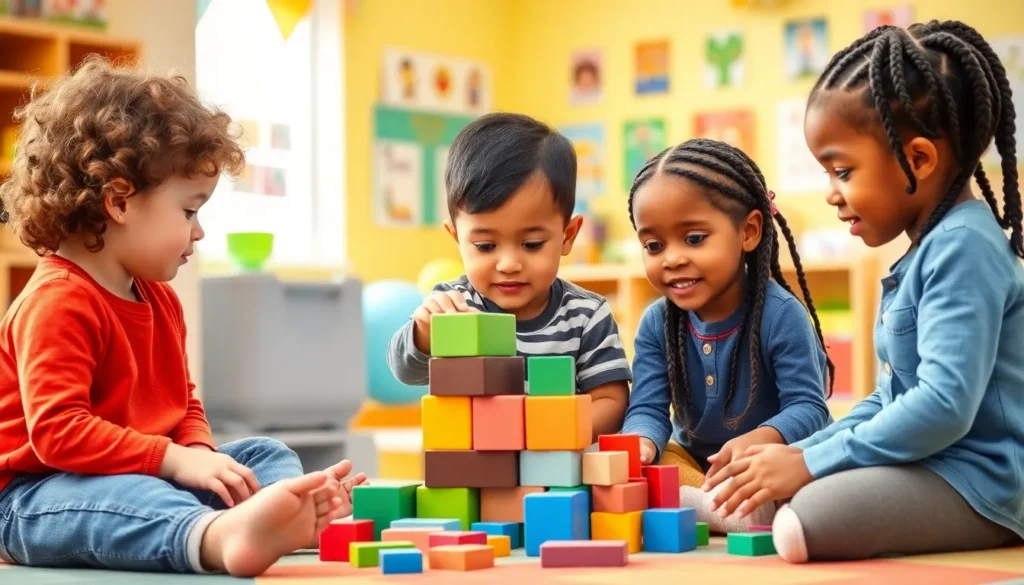
Hands-on activities provide children with tactile learning experiences that reinforce concepts. Manipulating tangible objects—such as building blocks or art supplies—allows children to discover principles through trial and error. This active engagement cultivates problem-solving skills, as children learn to navigate challenges independently. Educators select age-appropriate materials that stimulate curiosity and promote critical thinking. Additionally, group projects encourage cooperation, allowing children to learn the value of teamwork. Such experiences create lasting connections between theory and practice, significantly enhancing cognitive retention. Through hands-on activities, children develop a love for learning and the confidence to explore their interests.
Challenges In Experience Early Learning
Experience early learning faces several challenges that can hinder its effectiveness. Resource limitations present significant hurdles in creating optimal learning environments for young children.
Resource Limitations
Funding constraints affect access to quality materials and technology in early learning settings. Insufficient resources lead to overcrowded classrooms, limiting individualized attention. Programs lacking proper equipment can struggle to implement engaging hands-on activities, impeding cognitive and social development. Additionally, not all educators receive adequate training, which may further diminish the quality of early learning experiences. Enhancing funding allocations for early education can ensure that all children receive a robust foundation for their future.
Parental Involvement
Parental involvement is crucial yet often inconsistent. Some parents may lack awareness of the significance of their participation in early learning activities. Engagement levels can vary, impacting a child’s learning reinforcement at home. Open communication between educators and families can foster a collaborative approach to education. Programs that educate parents on ways to support their children’s development can significantly improve outcomes. Strengthening parental involvement ultimately enhances children’s educational experiences and promotes meaningful learning connections.
Experience early learning serves as a cornerstone for children’s development in today’s fast-paced world. By engaging in hands-on activities and play-based learning, children not only acquire essential academic skills but also build critical social and emotional foundations. The role of qualified educators is pivotal in creating inclusive environments that cater to diverse learning styles.
Parental involvement further enhances these experiences, reinforcing skills learned in educational settings. As families and educators work together, they can cultivate a love for learning that lasts a lifetime. Investing in early education is investing in a child’s future, ensuring they grow into capable and confident individuals ready to navigate an ever-changing landscape.


