

Clay modeling isn’t just for kids playing in the sandbox; it’s a magical world where creativity meets craftsmanship. Imagine molding a lump of clay into a whimsical creature or a stunning vase that could impress even the pickiest of art critics. With just a few tools and a pinch of imagination, anyone can transform their ideas into tangible masterpieces.
This hands-on art form offers a delightful escape from the daily grind. It’s like therapy but with fewer tears and more mud! Whether you’re a seasoned artist or a curious beginner, clay modeling invites you to unleash your inner sculptor. So grab your apron and let’s dive into the squishy, satisfying world of clay—where the only limit is your imagination (and maybe your ability to clean up afterward).
Overview of Clay Modeling
Clay modeling serves as a versatile medium for artistic expression. Artists utilize clay to create sculptures, pottery, and functional art pieces. This form of art appeals to individuals of varying skill levels, from beginners to seasoned professionals.
Different types of clay, such as earthenware, stoneware, and porcelain, cater to diverse project requirements. Each clay type has unique characteristics, influencing texture, strength, and appearance of the final product. Beginners often start with air-dry clay, as it simplifies the process and eliminates the need for a kiln.
Workshops and classes frequently provide structured environments for individuals to explore clay modeling techniques. These educational opportunities often cover fundamentals such as shaping, carving, and glazing. Experienced artists may delve into advanced techniques, including wheel-throwing and sculptural design.
The therapeutic benefits of clay modeling cannot be overlooked. Engaging with clay fosters mindfulness and reduces stress, allowing artists to immerse themselves in the creative process. Many individuals find that working with clay enhances motor skills and hand-eye coordination.
Fostering community engagement, clay studios often host group sessions and exhibitions. These environments encourage collaboration and the sharing of ideas among artists. The beauty of clay modeling lies in its accessibility; anyone can pick up a lump of clay and start creating, transforming imagination into tangible art.
History of Clay Modeling
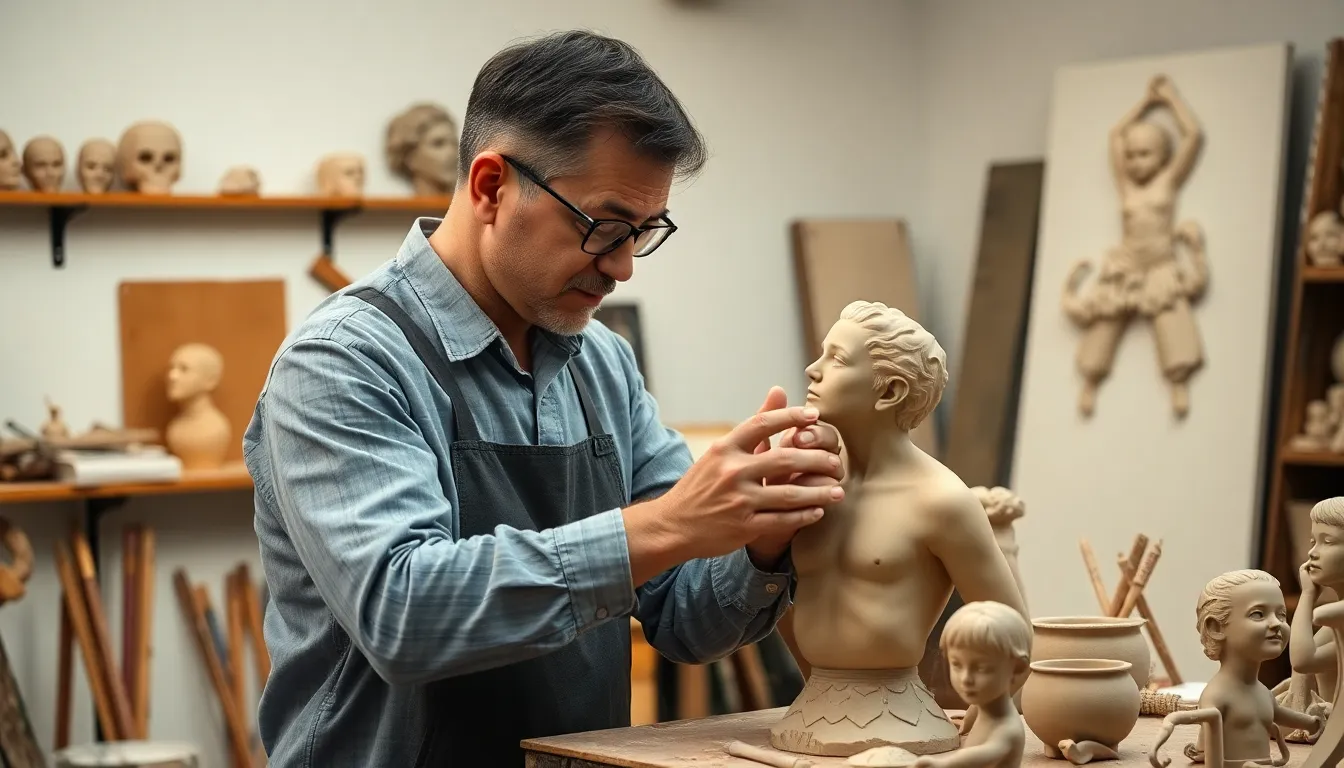
Clay modeling boasts a rich history, with roots tracing back thousands of years. This captivating art form evolved from basic utilitarian pieces to intricate sculptures and decorative items.
Ancient Techniques
Ancient civilizations utilized clay to express their creativity. Mesopotamians, for instance, crafted tablets inscribed with cuneiform writing. Egyptians built clay figurines meant for religious practices. Various cultures employed hand-building and coiling techniques, allowing them to create pots and vessels. Those methods laid the groundwork for future advancements in pottery and sculpture.
Evolution Over Time
Over centuries, clay modeling underwent significant transformations. The invention of the potter’s wheel around 3500 BCE marked a pivotal moment, streamlining the creation of symmetrical pottery. During the Renaissance, artists like Michelangelo pushed the boundaries, using clay for sculpting human figures. Various techniques emerged, including glazing and firing, further enhancing durability and artistry. Modern times embraced diverse styles, integrating contemporary materials and methods, showcasing clay’s versatility in art.
Benefits of Clay Modeling
Clay modeling offers numerous advantages, appealing to individuals across various age groups and skill levels.
Creative Expression
Artists find clay modeling an excellent medium for expressing their creativity. Unique sculptures, intricate pottery, or playful designs come to life with each shaping session. Individuals leverage their imagination to construct physical representations of ideas, emotions, and stories. Personal styles emerge as practitioners hone their techniques and experiment with different types of clay. Varied tools allow for detailed textures and effects, enriching the artistic process. Every creation serves as a reflection of the artist’s vision, encouraging continued exploration and growth.
Therapeutic Aspects
Engaging with clay fosters a sense of mindfulness that can alleviate stress. Sculpting encourages focused attention, helping practitioners connect with the present moment. Working with hands enhances fine motor skills, promoting dexterity and coordination. Participants often experience a therapeutic release as they knead and mold, leading to emotional benefits. Group sessions further facilitate community bonding while sharing experiences. Overall, the act of creating shapes with clay nurtures mental well-being alongside artistic development.
Tools and Materials
Clay modeling requires specific types of clay and essential tools. These components enhance the creative process, allowing for diverse techniques and designs.
Types of Clay
Earthenware, stoneware, and porcelain represent the primary types of clay used in modeling. Each type has distinct properties, making them suitable for various projects. Earthenware offers ease of use and low firing temperature, ideal for beginners. Stoneware, known for its durability, withstands higher temperatures and is perfect for functional items like dinnerware. Porcelain stands out for its delicate and refined finish, suitable for intricate decorative pieces. Air-dry clay remains popular among novices due to its convenience and no need for a kiln. Artists select clay based on their project needs and personal preferences.
Essential Tools
A few essential tools significantly enhance the clay modeling experience. A rolling pin helps achieve an even thickness when flattening clay. Sculpting tools, such as loop and ribbon tools, allow for detailed shaping and carving. Additionally, a clay knife aids in cutting and trimming for clean edges. Sponges help smooth surfaces, while wire cutters assist with removing clay from a work surface. Finally, a sturdy work surface provides ample space for creativity. Artists often gather these tools to explore various techniques and design possibilities.
Techniques in Clay Modeling
Clay modeling encompasses a variety of techniques that cater to different skill levels and creative visions. Understanding these methods enhances the artistic experience.
Basic Sculpting Techniques
Beginners often start with hand-building techniques. Pinching forms a basic shape by squeezing clay between fingers. Coiling involves rolling out clay into long strips and stacking them to create structures. Slab construction utilizes flat pieces of clay to assemble shapes like boxes or pots. Joining these parts requires scoring surfaces to ensure a strong bond. Adding texture can transform a simple form into an engaging piece. Utilizing simple tools, such as wooden dowels and knives, enhances detail and precision in sculptures.
Advanced Methods
Advanced artists explore wheel-throwing for creating symmetrical pottery. This technique requires skillful manipulation of clay on a spinning wheel, allowing for even walls and refined shapes. Sculpting techniques like additive and subtractive methods refine existing forms; adding more clay creates complex details, while removing excess clay shapes the final design. Artists also experiment with glazing to enhance color and finish, incorporating firing techniques to solidify the finished product. Incorporating mixed media and innovative techniques expands artistic possibilities, demonstrating the versatility and evolution of clay modeling.
Popular Clay Modeling Projects
Many artists and hobbyists enjoy various projects in clay modeling that showcase creativity and skill.
Sculptures
Creating sculptures stands out as a favorite for many due to its freedom of expression. Artists often explore themes from nature to fantasy, shaping figures that range in complexity.
Pottery
Making pottery remains a staple for clay enthusiasts. Functional items such as bowls, mugs, and plates combine both practical use and artistic flair.
Figurines
Crafting figurines captures the imagination of those looking to depict characters or whimsical creatures. These small figures often feature intricate details that showcase the artist’s attention to craftsmanship.
Wall Art
Producing wall art from clay offers a unique way to decorate living spaces. Artists create stunning reliefs and decorative tiles that add texture and depth to walls.
Jewelry
Designing jewelry in clay allows for personalization and creativity. Necklaces, earrings, and bracelets can feature vibrant colors and unique forms that reflect an individual’s style.
Home Decor
Creating home decor items like planters and candle holders provides functionality along with artistic value. These projects often incorporate innovative designs and can enhance any living environment.
Educational Projects
Engaging in educational projects benefits schools and community centers. Clay modeling activities encourage collaboration, enabling students to explore their creativity while learning essential techniques.
Art Displays
Participating in art displays allows artists to share their work with the public. Exhibitions often highlight different clay modeling projects, showcasing the diversity and creativity within the medium.
These popular clay modeling projects not only demonstrate artistic skills but also foster a sense of community and collaboration among artists of all levels.
Clay modeling offers a unique blend of creativity and therapeutic benefits that resonates with individuals of all ages. Whether someone is crafting a simple pot or an intricate sculpture, the process encourages self-expression and mindfulness. The accessibility of various types of clay and techniques makes it easy for anyone to start their artistic journey.
As artists continue to innovate and push the boundaries of this ancient art form, clay modeling remains a vibrant and evolving medium. Engaging in this practice not only nurtures artistic skills but also fosters a sense of community among creators. Embracing clay modeling can lead to a fulfilling and enriching experience that transforms imagination into tangible art.


